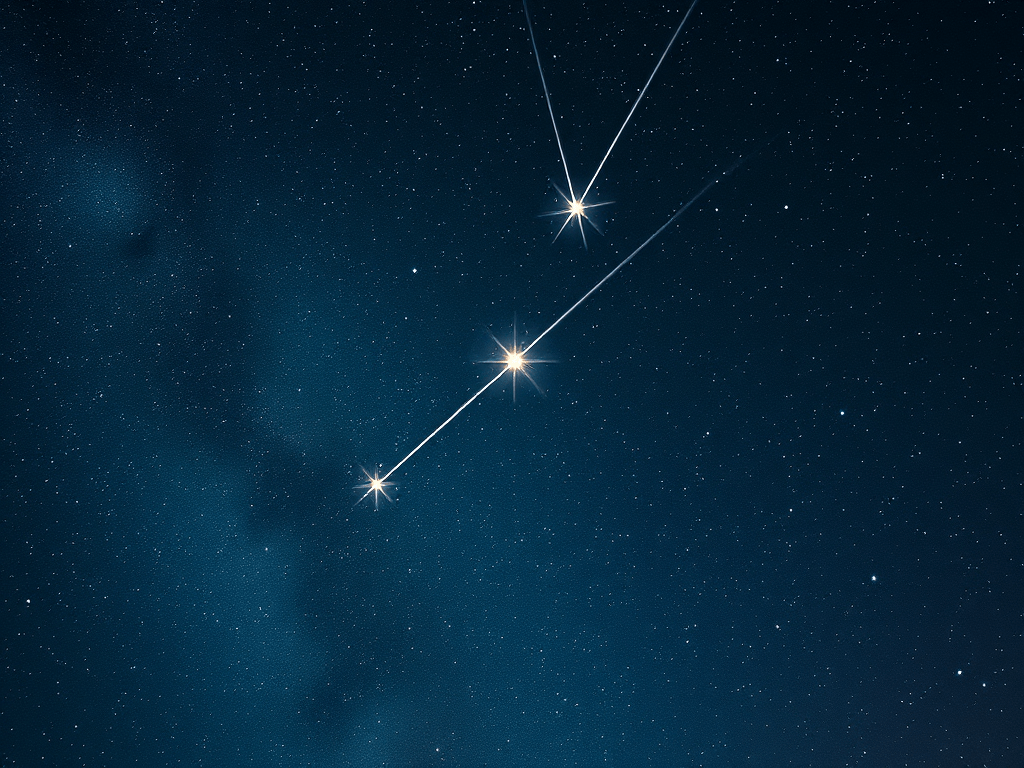
Have you ever gazed up at the night sky and suddenly noticed a brief streak of light flashing across your field of view, lasting only a fraction of a second, and wondered what it was? If so, congratulations—you have most likely witnessed a meteor!
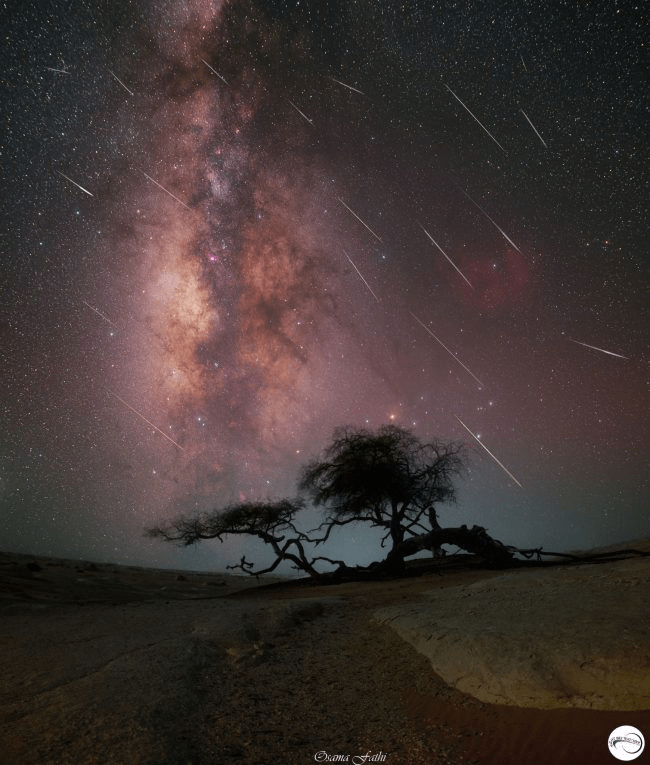
Around mid-August each year, astronomy enthusiasts—or even casual skywatchers who simply enjoy immersing themselves in the night sky—are treated to a spectacular celestial display as the Perseid meteor shower reaches its peak. This meteor shower is named after the constellation Perseus, because careful observation reveals that the meteors appear to radiate from a single point in the sky located within this constellation.
Perseus is one of the largest constellations in the northern celestial hemisphere and is best observed during the evenings of October and November. It was first catalogued by the astronomer Claudius Ptolemy in the 2nd century CE.
Interesting Facts
Perseus is the 24th-largest constellation in the night sky, covering an area of approximately 615 square degrees. It lies in the first quadrant of the northern celestial hemisphere (NQ1) and is visible from latitudes between −35° and +90°, extending all the way to the North Celestial Pole. Neighboring constellations include Andromeda, Aries, Auriga, Camelopardalis, Cassiopeia, Taurus, and Triangulum.
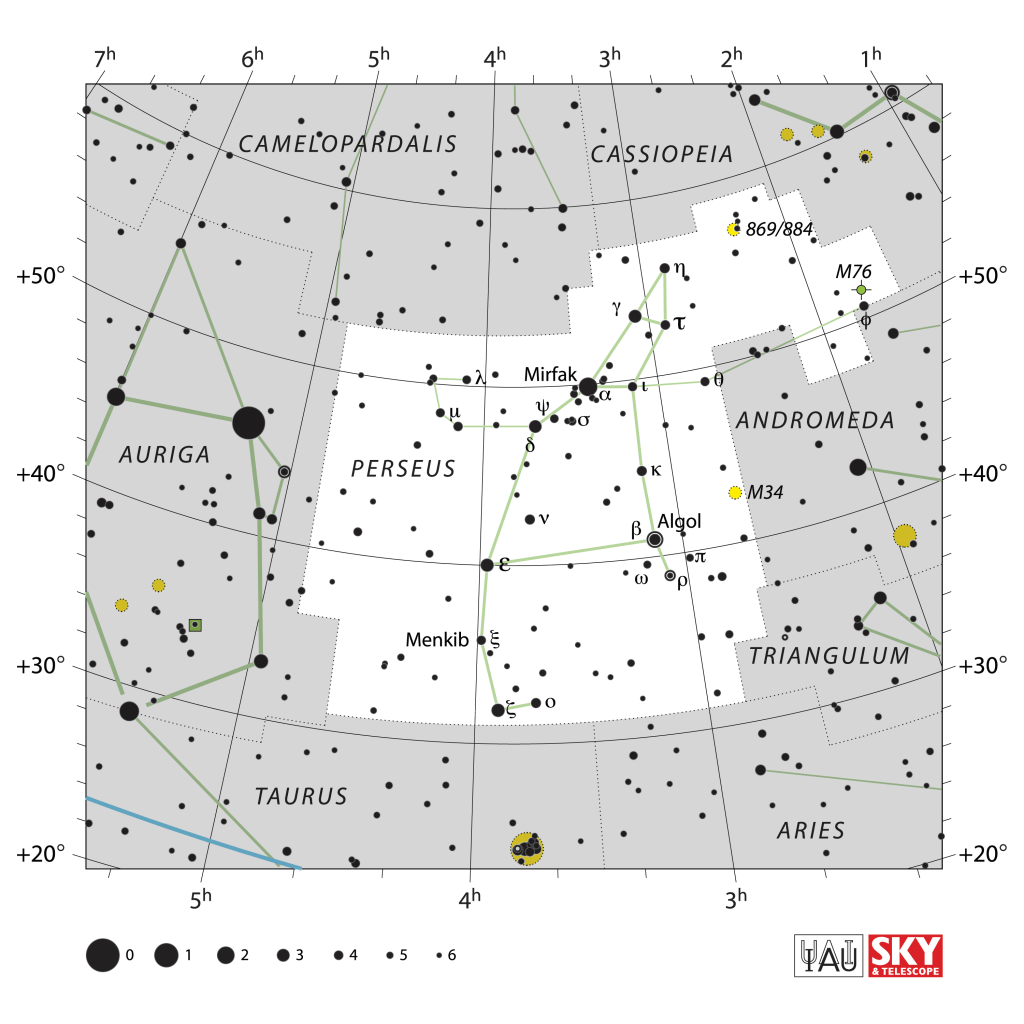
The constellation is named after the hero Perseus (/ˈpɜːrsiəs/) from ancient Greek mythology. In English, it is also known as “the Hero”, while in Sino-Vietnamese tradition it is referred to as Anh Tiên. The genitive form Persei (/ˈpɜːrsiaɪ/) is used in stellar nomenclature. The official three-letter abbreviation “Per” was adopted by the International Astronomical Union (IAU) in 1922.
Perseus is also part of a group of constellations known as the Perseus family, which includes Andromeda, Auriga, Cassiopeia, Cepheus, Cetus, Lacerta, Pegasus, and Triangulum.
Notable deep-sky objects within Perseus include the open cluster M34 (NGC 1039), the Double Cluster (NGC 869 & NGC 884), the California Nebula (NGC 1499)—an emission nebula—and the planetary nebula M76, also known as the Little Dumbbell Nebula (NGC 650/651).
The brightest star in the constellation is Mirfak (Alpha Persei) with an apparent magnitude of 1.79. Perseus contains eight stars with officially recognized proper names: Algol (Beta Persei), Atik (Zeta Persei), Berehynia, Menkib (Xi Persei), Miram (Eta Persei), Mirfak (Alpha Persei), Misam (Kappa Persei), and Muspelheim.
Observing the Constellation Perseus
At the peak of the Perseid meteor shower (mid-August), Perseus rises in the northeast after midnight when observed from Vietnam. In subsequent months, the constellation becomes visible earlier; for example, in October it rises around 7:00 PM. From a dark-sky location away from urban light pollution, the constellation’s structure is easily recognizable, with Mirfak positioned near its center.
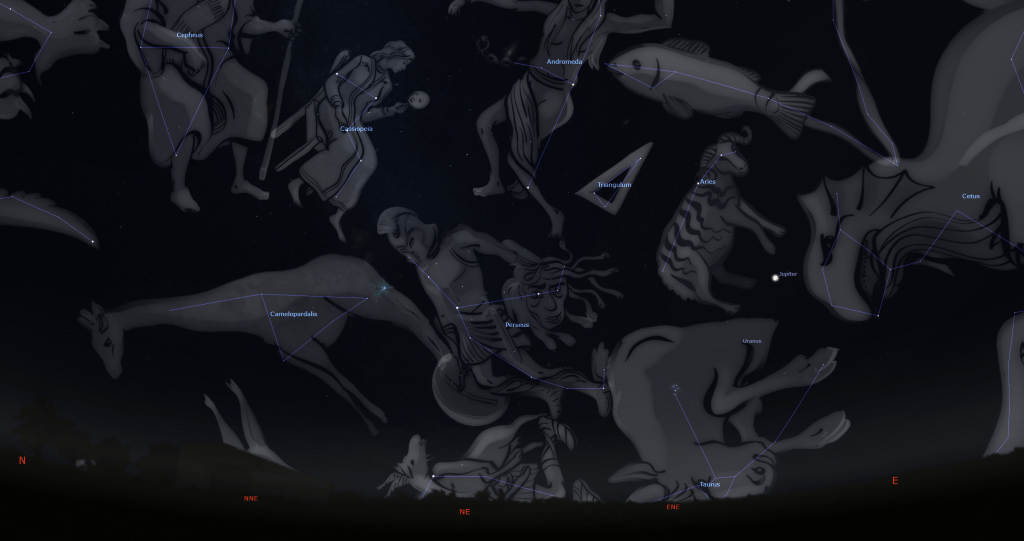
Perseus can be identified by its characteristic stellar alignment known as the “Segment of Perseus”, which extends from the yellow giant Miram, through Gamma Persei, to Mirfak, and onward to Sigma, Psi, and Delta Persei, near the constellation’s core. This stellar segment can be located by tracing an imaginary line from Gamma Cassiopeiae (the central star of Cassiopeia’s distinctive “W” asterism) through Ruchbah (Delta Cassiopeiae).
Alternatively, Mirfak can be found using stars from Andromeda and Pegasus. It lies along the extended line connecting Alpheratz (the corner star of the Great Square of Pegasus) through Mirach and Almach, both members of Andromeda.
Perseus is also framed by easily recognizable asterisms: the “W” of Cassiopeia to the north, the hexagon of Auriga to the west with the bright star Capella, the Pleiades (M45) to the south, and the linear chain of bright stars in Andromeda to the east.
Mythology
The constellation Perseus represents the Greek hero Perseus and is one of six constellations associated with his mythological narrative. Perseus was the son of Danaë, daughter of King Acrisius of Argos. After receiving a prophecy that he would be killed by his grandson, Acrisius imprisoned Danaë. However, Zeus, king of the Olympian gods, fell in love with her and entered her prison as a shower of golden rain, resulting in the birth of Perseus.
Upon discovering this, Acrisius sealed Danaë and her child in a wooden chest and cast them into the sea. After days adrift, they washed ashore and were rescued by a fisherman named Dictys, who raised Perseus as his own son. Dictys’ brother, King Polydectes, desired Danaë and sought to eliminate Perseus by sending him on an impossible quest: to bring back the head of the Gorgon Medusa.
Medusa, unlike her immortal sisters Stheno and Euryale, was mortal. Once a beautiful woman, she was transformed into a Gorgon by Athena, with serpents for hair and a gaze that turned onlookers to stone. With divine assistance—Athena’s reflective shield, Hermes’ winged sandals, Hades’ helm of invisibility, and an adamantine sword forged by Hephaestus—Perseus succeeded in beheading Medusa. From her body sprang Pegasus, the winged horse, and Chrysaor.
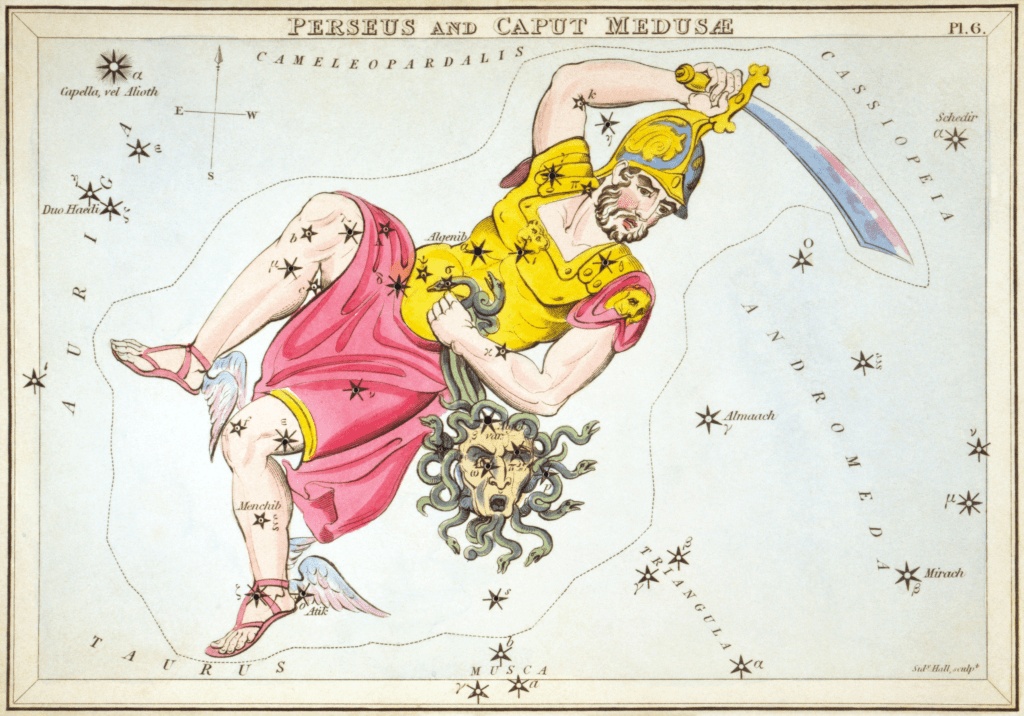
On his return journey, Perseus rescued Princess Andromeda by turning the sea monster Cetus to stone with Medusa’s head. Returning to Seriphos, he used the same power to petrify Polydectes and his followers, installing Dictys as king.
In a tragic twist of fate, Perseus later accidentally killed Acrisius during an athletic contest, thus fulfilling the ancient prophecy. Perseus and Andromeda married and had many children, including Perses, regarded as the legendary ancestor of the Persian kings.
In the sky, Perseus, Andromeda, Cepheus, Cassiopeia, Cetus, and Pegasus appear close together, forming a rich mythological tableau across the heavens. Perseus is traditionally depicted holding Medusa’s severed head—represented by the famous eclipsing variable star Algol (Beta Persei).
“Let me tell you a tale,
Of the most beautiful night sky,
Where the Maiden Andromeda dwells,
Beside the Hero Perseus.”
 Khanh's Gallery
Leave a comment