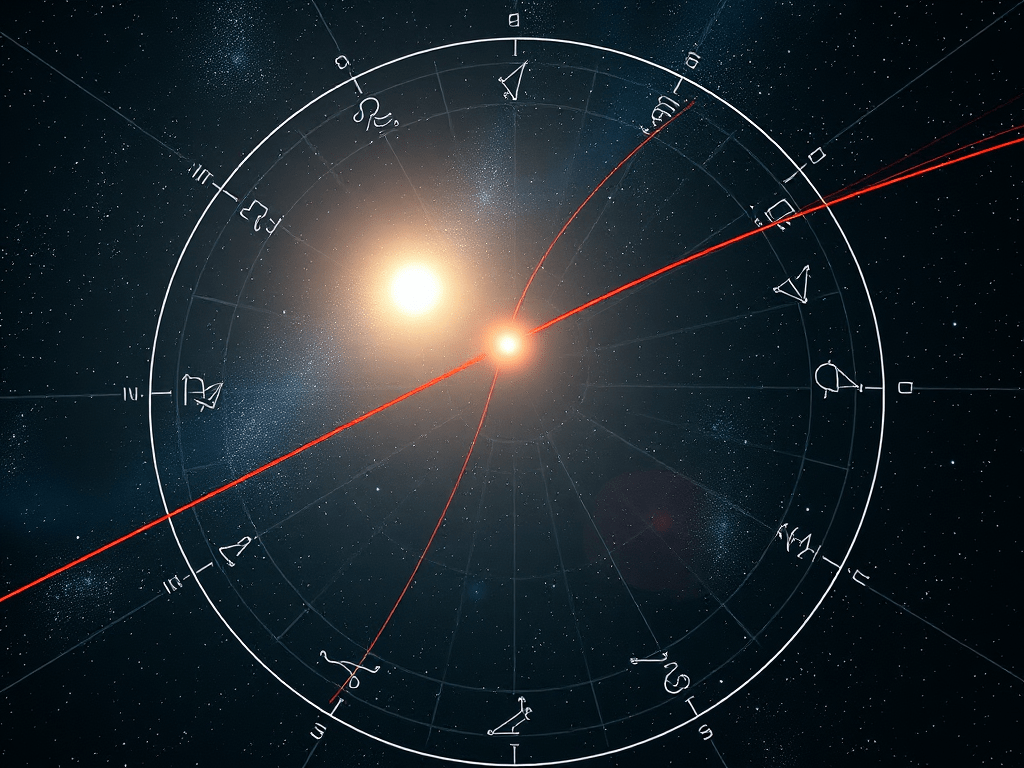
The 12 signs of the Zodiac mentioned in astrology are closely linked to Earth’s celestial mechanics. One might assume that the dates in a horoscope correspond to the exact time the Sun transits through each specific constellation, but this is factually incorrect. Astrology and Astronomy are distinct systems. Furthermore, calculations regarding the dynamics of the Earth, Sun, and stars reveal that the Ecliptic (the path of the Sun) is far more complex than commonly assumed.
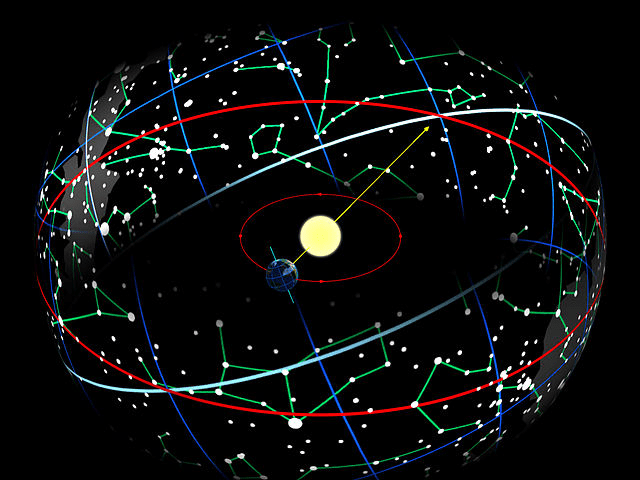
Solar Transit and Apparent Motion
As Earth revolves around the Sun, an observer on Earth perceives the Sun as moving across the background of various constellations. Much like the Moon appearing in different positions in the night sky, the Sun’s position relative to the background stars on the celestial sphere shifts eastward day by day. It is crucial to note that the Sun is not physically moving in this manner; rather, this is an apparent motion caused by Earth’s own orbital revolution.
Throughout the year, the Sun appears superimposed against different zodiacal constellations. One month, the Sun appears in front of Gemini; the next, it is in Cancer. The dates listed in astrological magazines refer to Astrological Signs (e.g., Aries spans from March 21 to April 19). However, your “sign” does not necessarily correspond to the Sun’s actual physical position within that constellation on the day of your birth. It is simply a matter of divergent systems.
The Discrepancy: Why Constellations and Signs Do Not Align
To understand why this mismatch exists, we must examine Earth’s mechanics and the measurement of time. Time determination is complex, particularly when based on solar and stellar reference frames.
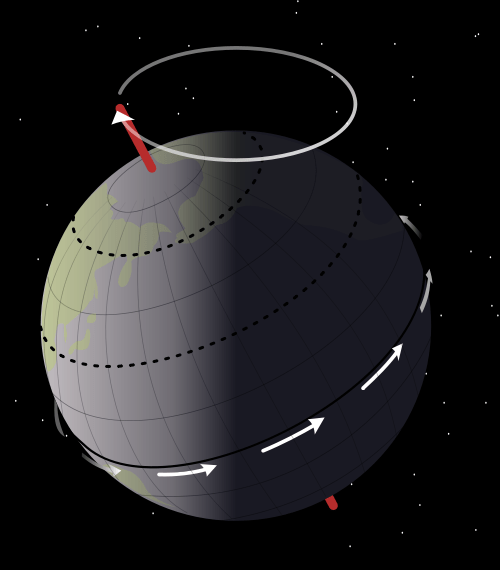
Currently, Earth’s North Pole points approximately toward Polaris (the North Star); however, this alignment is not permanent. Earth undergoes axial precession—a slow oscillation of its rotational axis. This motion causes the projection of the North Celestial Pole to trace a circle upon the celestial sphere. This precessional cycle is relatively slow, requiring approximately 26,000 years to complete one full revolution.
Throughout its orbit around the Sun, the orientation of Earth’s axis shifts incrementally. Consequently, the specific positions along our orbital path undergo slight variations relative to the background stars. This implies that each year, the Sun’s apparent position against the background stars on any given date—such as the Summer Solstice (June 21st)—shifts by a minute amount.
Historical Shifts of the Solstice
Two millennia ago, during the Summer Solstice, the Sun was positioned roughly between the constellations Leo and Cancer. Fourteen years ago, on this same date, the Sun resided between Gemini and Taurus. By the year 4609, the solstice point will have precessed into the constellation Aries.
Modern Constellations versus the Zodiac
Unlike the astrological zodiac signs—which are divided into equal 30-degree segments—modern astronomical constellations possess non-uniform dimensions. Consequently, the duration of the Sun’s transit across a constellation is directly dependent on that constellation’s angular area on the celestial sphere.
In 1930, the International Astronomical Union (IAU) formally defined constellations as specific regions on the celestial sphere, rather than merely the asterisms formed by their component stars. This established distinct boundaries for the modern constellations, the majority of which are derived from those cataloged by the ancient astronomer Ptolemy in the 2nd century.
The Ecliptic and Ophiuchus
Based on current official boundaries, there are effectively 13 constellations situated along the Ecliptic. The “13th constellation” is Ophiuchus (the Serpent Bearer), located between Sagittarius and Scorpius. Conversely, the traditional astrological zodiac remains fixed at 12 divisions.
While the zodiac lacks scientific validity for predicting personal variables such as relationships, finance, or health, it serves as an excellent pedagogical tool for understanding the celestial mechanics of the Sun and Earth, as well as preserving historical cultural contexts. Although the concepts of the zodiac have been distorted over time, they serve as a reminder of the humble origins of Astronomy.
 Khanh's Gallery
Leave a comment