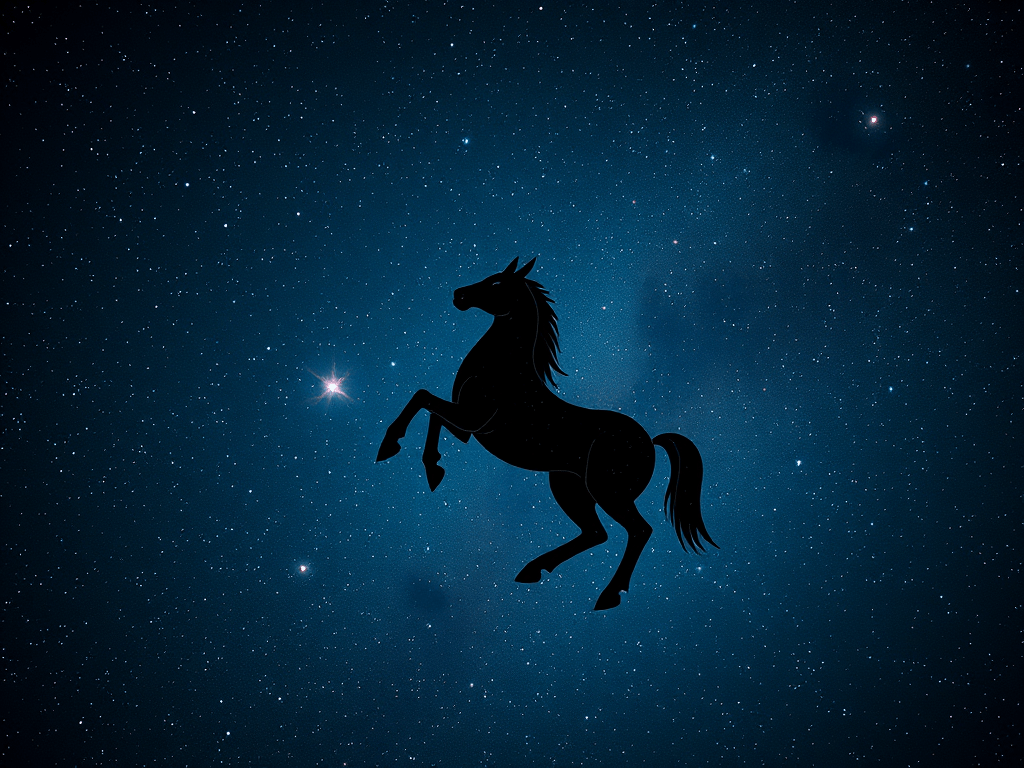
The constellation Centaurus is located in the Southern Hemisphere. It is one of the Greek constellations cataloged by the Greek astronomer Ptolemy in the 2nd century, though it was previously mentioned by the astronomer Eudoxus and the poet Aratus in earlier Greek texts.
Centaurus is one of the largest constellations in the sky. It represents a centaur, a creature that is half-human, half-horse in Greek mythology. Sources vary on which centaur the constellation represents, but it is usually taken to be Chiron, the mentor to the Greek heroes Hercules, Peleus, Achilles, Theseus, and Perseus.
Centaurus contains two of the ten brightest stars in the sky: Alpha Centauri and Beta Centauri. It is also home to Centaurus A, one of the brightest galaxies in the night sky, and the globular cluster Omega Centauri. The famous Blue Planetary Nebula (also known as “The Southerner”) and the Boomerang Nebula are also located in Centaurus.
LOCATION OF CENTAURUS IN THE SKY
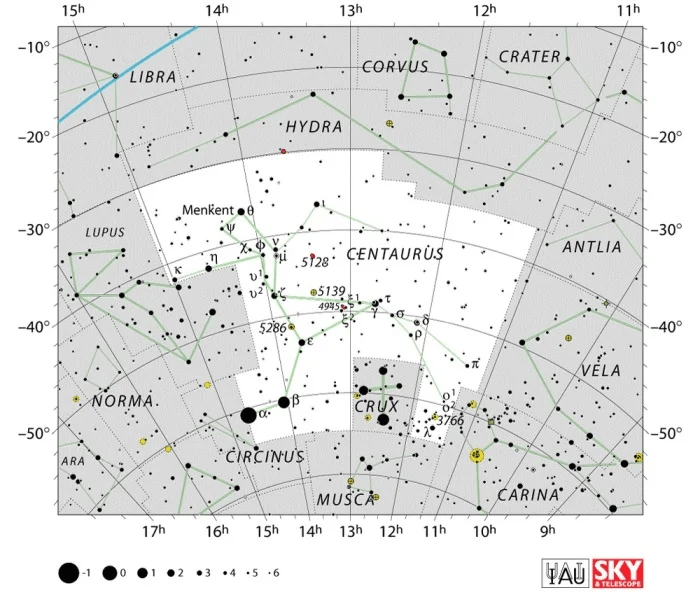
Centaurus is the ninth-largest constellation in the sky, occupying an area of 1060 square degrees. It is located in the third quadrant of the southern hemisphere (SQ3) and can be seen at latitudes between +25° and -90°. Neighboring constellations are Antlia, Ophiuchus, Scorpius, Corona Australis, Telescopium, Microscopium, and Capricornus.
Centaurus belongs to the Hercules Family of constellations.
Centaurus contains 11 stars with known planets and does not contain any Messier objects. The brightest star in the constellation is Alpha Centauri, which is also the fourth-brightest star in the sky. Beta Centauri is the second-brightest in the constellation and the tenth-brightest in the night sky. There are three meteor showers associated with the constellation: the Alpha Centaurids, Omicron Centaurids, and Theta Centaurids.
Centaurus contains eight named stars. The names officially approved by the International Astronomical Union (IAU) are Dofida, Hadar, Menkent, Nyamien, Proxima Centauri, Rigil Kentaurus, Toliman, and Uklun.
ORIGIN OF THE NAME CENTAURUS
The origin of Centaurus traces back to a constellation the Babylonians called the Bison-man (MUL.GUD.ALIM). They depicted it as a four-legged bison with the head of a man, or a creature with a human head and torso attached to the rear legs of a bison or bull. The Babylonians associated this creature with the Sun god Utu (Shamash).
In Greek and Roman times, Centaurus was associated with a centaur, a mythological creature that was half-man, half-horse. However, unlike the constellation Sagittarius (The Archer), the exact identity of this centaur is not always clearly defined.
According to Ovid, a Roman poet living in the early first millennium, it represents the wise Chiron, who tutored many famous Greek heroes: Achilles, Jason, Theseus, Heracles, and Apollo’s son Asclepius (represented by the constellation Ophiuchus). However, most other sources associate Chiron with the constellation Sagittarius, and Centaurus with one of the less civilized centaurs.
Chiron was the son of the Titan king Cronus and the sea nymph Philyra. Cronus seduced the nymph, but they were surprised by Cronus’s wife, Rhea. To avoid being caught, Cronus turned himself into a horse. The result was Philyra giving birth to a son who was a hybrid.
Chiron was a renowned and respected teacher of medicine, music, and hunting. He lived in a cave on Mount Pelion and taught many young princes as well as future heroes. In the end, he died a tragic death, accidentally struck by one of Heracles’ arrows, which had been dipped in the blood of the Hydra, a poison with no cure.
As the son of the immortal Cronus, Chiron was immortal himself. When the arrow struck him, he suffered terrible pain but could not die. Zeus eventually released the centaur from immortality and suffering, allowing him to die, and subsequently placed him among the stars.
Centaurus is often depicted as a centaur sacrificing an animal, represented by the constellation Lupus (The Wolf), to the gods on the altar represented by the constellation Ara (The Altar). The centaur’s front legs are marked by two of the brightest stars in the sky, Alpha and Beta Centauri, also known as Rigil Kentaurus and Hadar.
These two stars also serve as pointers to the Southern Cross (Crux), which lies beneath the centaur’s feet.
MAJOR STARS IN CENTAURUS
Rigil Kentaurus – Alpha Centauri
Alpha Centauri is a multiple star system, only 4.365 light-years away. It has an apparent magnitude of -0.27. Alpha Centauri A, the brightest component in the system, has a visual magnitude of -0.01 and is the fourth-brightest star in the night sky, only slightly fainter than Arcturus in Boötes. However, the Alpha Centauri system as a whole is brighter than Arcturus.
Alpha Centauri A, the primary star, is similar to the Sun: it is a yellow-white main-sequence star of spectral type G2V, approximately 10% more massive than the Sun.
Alpha Centauri B is a distinctly different star in the constellation. It is a main-sequence star of spectral type K1V, slightly smaller than the Sun. It has an apparent magnitude of 1.33 and is the 21st brightest star in the sky, just slightly brighter than Regulus in Leo. The two stars are of the same age, approximately 4.85 billion years, and are 250 million years older than the Sun.
Proxima Centauri (Alpha Centauri C) There is a third star in the Alpha Centauri system: Proxima Centauri, a red dwarf that forms a visual pair with Alpha Centauri AB and is believed to be gravitationally bound to them. Designated Alpha Centauri C, it is separated by 2.2° from the pair. It belongs to spectral type M5Ve or M5Vie, meaning it is a small main-sequence star or a sub-dwarf. Its estimated mass is only 12.3% of the Sun’s mass, and it is expected to remain on the main sequence for four trillion years.
Proxima Centauri is only 4.24 light-years from the Sun, making it the closest star to our Solar System. However, with an apparent magnitude of 11.05, it cannot be seen with the naked eye. The star is classified as a UV Ceti-type flare star, meaning it experiences sudden changes in brightness. Its brightness varies between magnitude 11.0 and 11.9. Proxima Centauri was discovered by the Scottish-South African astronomer Robert Innes in 1915.
Alpha Centauri is also known by its traditional names: Rigil Kentaurus, Rigil Kent, and Toliman. Rigil Kentaurus is derived from the Arabic phrase Rijl Qanṭūris, meaning “foot of the centaur.” The name Toliman comes from the Arabic al-Zulmān, meaning “the ostriches.”
Alpha Centauri is the closest star system to the Solar System. If there were observers in the Alpha Centauri system, they would see a sky quite similar to ours, except that the brightest star in Centaurus would be missing from their view, and the Sun would appear as a magnitude 0.5 star in the constellation Cassiopeia.
Hadar (Agena) – Beta Centauri
Beta Centauri is a blue-white giant, 348.83 light-years away. It has an apparent magnitude of 0.6 and is the tenth-brightest star in the sky. It belongs to spectral class B1III. The star’s traditional name, Hadar, comes from Arabic meaning “ground,” while Agena comes from Latin meaning “the knee.” Beta Centauri is a double star, with a companion star separated from the brighter component by 1.3 arcseconds. The brighter star, Hadar A, is a spectroscopic binary. Hadar A consists of a pair of identical stars with an orbital period of 357 days. At least one of the stars is a Beta Cephei variable, a star whose brightness varies due to pulsations on its surface. Hadar B orbits the main pair and takes at least 250 years to complete a revolution.
Menkent (Haratan) – Theta Centauri
Menkent (Theta Centauri) is an orange K-type giant (spectral class K0IIIb), located 60.9 light-years away. The star has an apparent magnitude of 2.06. Its traditional name, Menkent, means “shoulder (of the Centaur)” in Arabic. The star is sometimes also called Haratan.
Muhlifain – Gamma Centauri
Gamma Centauri is a double star consisting of two A0-type stars, each with an apparent magnitude of 2.9. The system is 130 light-years from Earth and has a combined apparent magnitude of 2.2. The two stars orbit each other every 83 years.
Epsilon Centauri
Epsilon Centauri is a blue-white giant belonging to spectral class B1III. It is a Beta Cephei variable, exhibiting brightness variations due to pulsations on its surface. Its mean apparent magnitude is 2.29, and its brightness varies from magnitude 2.29 to 2.31. Epsilon Centauri is 380 light-years away.
Eta Centauri
Eta Centauri is a very hot B-type dwarf, less than 20 million years old. It is a Be star, a star that exhibits variable emissions in its hydrogen spectral lines. It is also classified as a Gamma Cassiopeiae variable, or a shell star, meaning it is a fast rotator with a disk of gas surrounding it at the equator. The star rotates at an equatorial velocity of 310 km/s, and its rotation period lasts less than a day. Eta Centauri is 30 light-years away and has an apparent magnitude of 2.33.
Alnair – Zeta Centauri
Zeta Centauri is a spectroscopic binary with an apparent magnitude of 2.55. It is approximately 385 light-years away. The star’s traditional name, Alnair, is derived from the Arabic phrase Nayyir Badan Qanṭūris, meaning “the bright star of the Centaur’s body.” Alnair belongs to spectral class B2.5IV. It has an orbital period of just over eight days.
Ma Wei – Delta Centauri
Delta Centauri is a Be star, a B-type star belonging to class B2IVne, classified as a Gamma Cassiopeiae variable. It is approximately 395 light-years away. The star’s brightness fluctuates between magnitude 2.51 and 2.65. The name Ma Wei comes from the star’s Chinese name, Ma Wei san, meaning “The Third Star of the Horse’s Tail.” This is a reference to the asterism that Delta Centauri forms with G and Rho Centauri.
Nu Centauri
Nu Centauri is a blue-white subgiant (spectral type B2IV), located 475 light-years from Earth. The star is classified as a Beta Cephei variable, with brightness fluctuations caused by pulsations on its surface. It is also classified as an ellipsoidal variable, meaning it is a close binary star with components that are ellipsoidal in shape, with brightness changes caused by the varying amount of light-emitting area visible to the observer. Spica, the brightest star in Virgo, is an ellipsoidal variable. Nu Centauri has a mean apparent magnitude of 3.41. Its brightness varies from magnitude 3.38 to 3.41 over a period of 2.62 days.
Ke Kwan – Kappa Centauri
Kappa Centauri is a binary star, approximately 540 light-years away. It belongs to spectral type B2IV. The brighter component is a blue-white B-type subgiant with an apparent magnitude of 3.13, with a spectroscopic companion located 0.12 arcseconds away. Kappa Centauri is sometimes known by its Chinese name Ke Kwan, derived from Qí Guān sān, meaning “The Third Star of the Imperial Guards.”
BPM 37093
BPM 37093 is a white dwarf belonging to spectral class DAV4.4. It is a variable star of the DAV or ZZ Ceti type, meaning it is a pulsating white dwarf with a hydrogen-dominated atmosphere and belongs to spectral type DA. The star exhibits brightness variations due to non-radial gravity wave pulsations within the star itself. It is approximately 53 light-years away and has an apparent magnitude of 14.0.
DEEP SKY OBJECTS IN CENTAURUS
Centaurus A (NGC 5128)
Centaurus A is the fifth-brightest galaxy in the sky and one of the closest radio galaxies to the Solar System. It is a lenticular or giant elliptical galaxy, located 10 to 16 million light-years away.
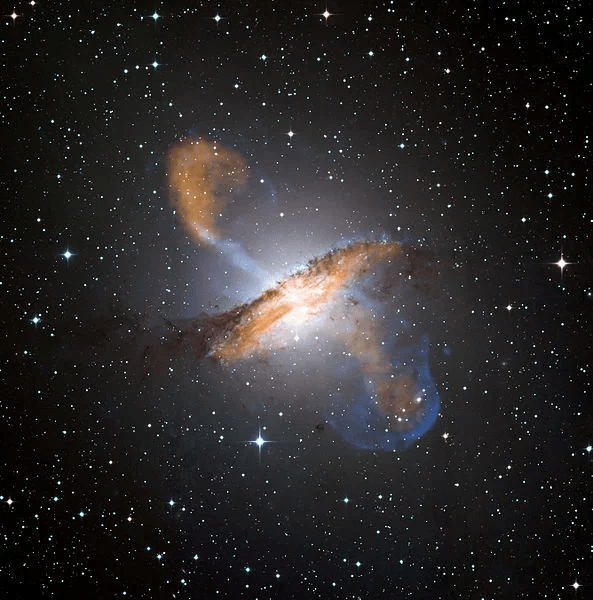
The galaxy has an apparent magnitude of 6.84. It is believed to contain a supermassive black hole at its center. Centaurus A is thought to be colliding with a spiral galaxy that it is currently devouring. As a result, there is an intense burst of star formation in Centaurus A. Over 100 star-forming regions have been observed in the galaxy’s disk. In 1986, a Type Ia supernova, SN 1986G, was discovered within the galaxy. Centaurus A lies at the center of the Centaurus A / M83 Group. Messier 83 (M83), better known as the Southern Pinwheel Galaxy, is located in the constellation Hydra, at the center of the other subgroup.
Omega Centauri – NGC 5139
Omega Centauri is a globular cluster in the constellation Centaurus. It lies approximately 4 degrees south of Centaurus A. This cluster has an apparent magnitude of 3.7 and is approximately 15,800 light-years away. It orbits the Milky Way and is one of the largest, brightest globular clusters known associated with the Milky Way. The star cluster is visible to the naked eye.
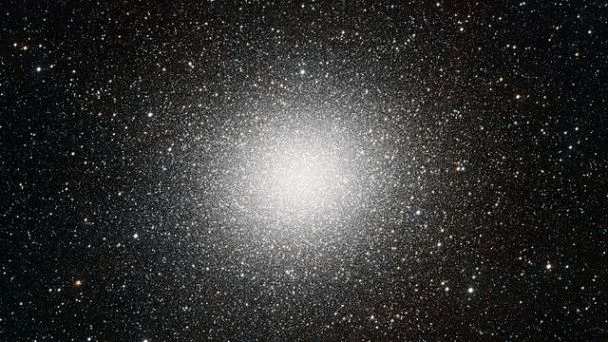
Originally listed as a star by Ptolemy, Omega Centauri was later rediscovered by Edmond Halley, who listed it as a nebula in 1677, and finally by the English astronomer John Frederick William Herschel, who recognized it as a cluster in the 1830s. This star cluster contains several million stars belonging to Population II, and its age is estimated to be about 12 billion years. The stars at the center of this cluster are located very close together, only 0.1 light-years apart. Kapteyn’s Star, a red dwarf in the constellation Pictor notable for its extremely high proper motion, is thought to originate from Omega Centauri. This star cluster is suspected to contain a black hole at its center. Scientists speculate that this cluster was once the core of a dwarf galaxy that was torn apart and absorbed by the Milky Way.
NGC 4945
NGC 4945 is one of the brightest galaxies in the Centaurus A / M83 Group and is the second-brightest galaxy in the Centaurus A subgroup. It was discovered by James Dunlop in 1826.
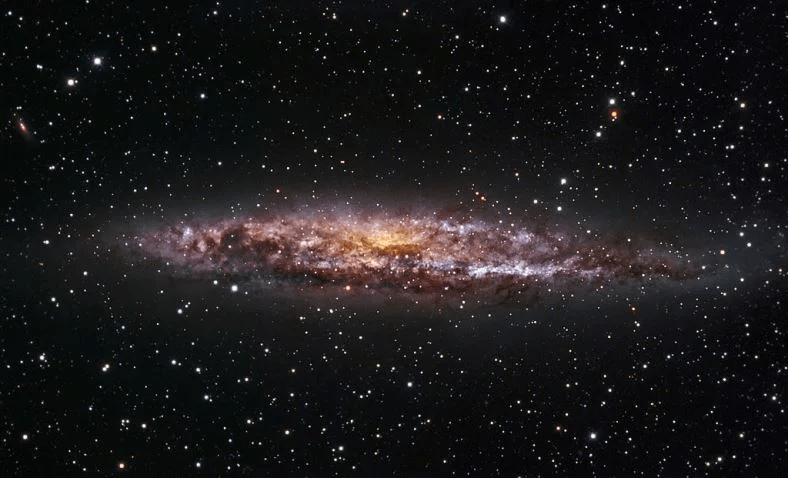
The galaxy is 11.7 million light-years away and has an apparent magnitude of 9.3. It is a spiral galaxy containing an unusual energetic Seyfert II nucleus, a galaxy that may contain a large black hole.
NGC 4650A
NGC 4650A is a polar-ring galaxy in the constellation Centaurus, a type of galaxy in which an outer ring of stars and gas rotates over the poles of the galaxy.
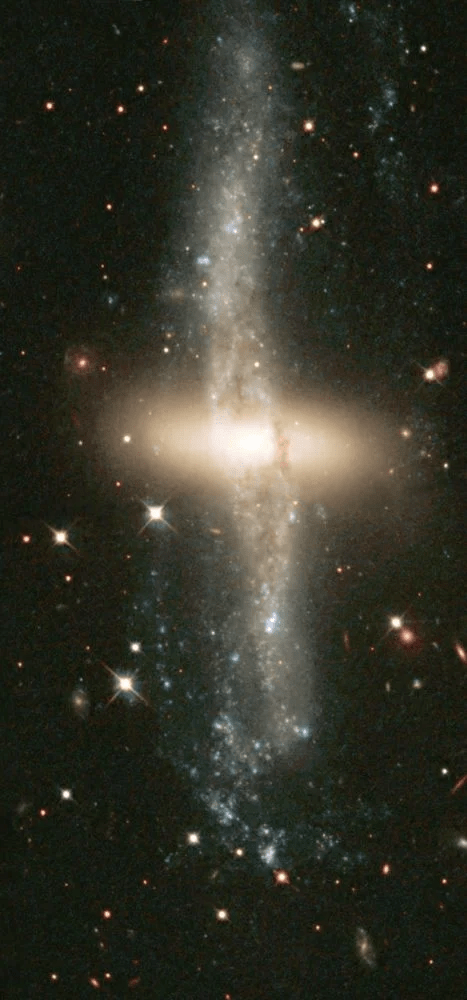
These polar rings are thought to form when two galaxies interact gravitationally with each other, or when a smaller galaxy collides orthogonally with the plane of rotation of a larger galaxy. Only about 100 polar-ring galaxies are known. NGC 4650A has an apparent magnitude of 13.9 and is approximately 130 million light-years away.
The Blue Planetary – NGC 3918
The Blue Planetary Nebula, sometimes called “The Southerner,” is a bright planetary nebula in the constellation Centaurus. It is the brightest planetary nebula in the far southern region of the sky.
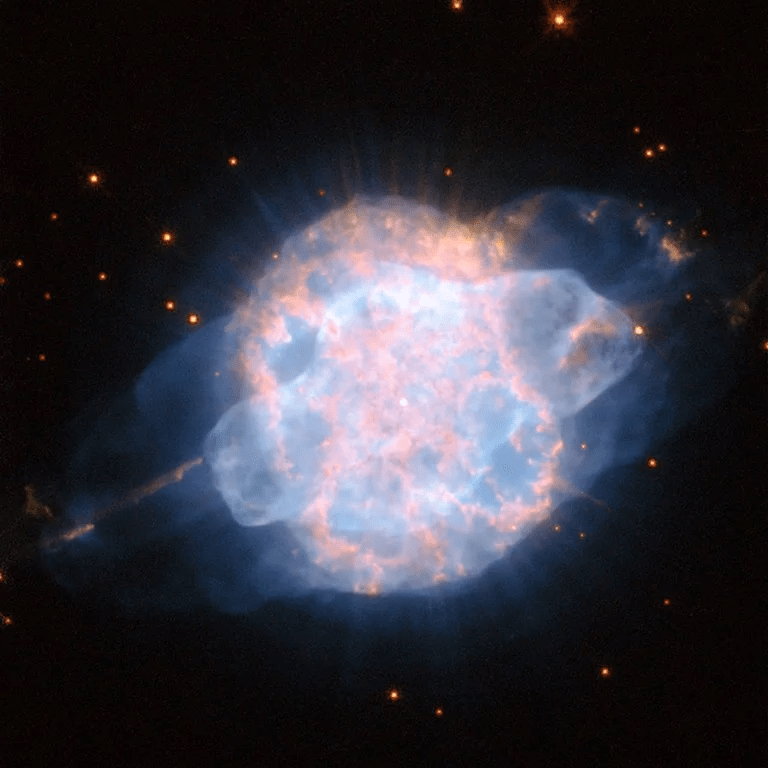
This nebula has an apparent magnitude of 8.5 and can be observed in a small telescope. It was discovered by John Herschel in 1834. It is approximately 4,900 light-years away.
NGC 4622
NGC 4622 is a face-on spiral galaxy, 111 million light-years away. It has an apparent magnitude of 12.6.

The galaxy is sometimes called the “backward galaxy.” Unlike most known spiral galaxies, whose spiral arms trail behind the rotation of the disk (in spiral galaxies, spiral arms usually follow the trail), NGC 4622 has a single inner arm that winds in the direction of rotation. Initially, scientists suspected the inner arm was the leading arm, but observations showed it is actually a trailing arm. The results of these observations were met with skepticism because the concept that a pair of spiral arms could lead was difficult to accept. Later, it was discovered that the galaxy has two new weak arms in the inner disk rotating opposite to the outer pair.
NGC 5090 and NGC 5091
NGC 5090 and NGC 5091 form a pair of galaxies that are in the process of merging and colliding. They are 150 million light-years from Earth.
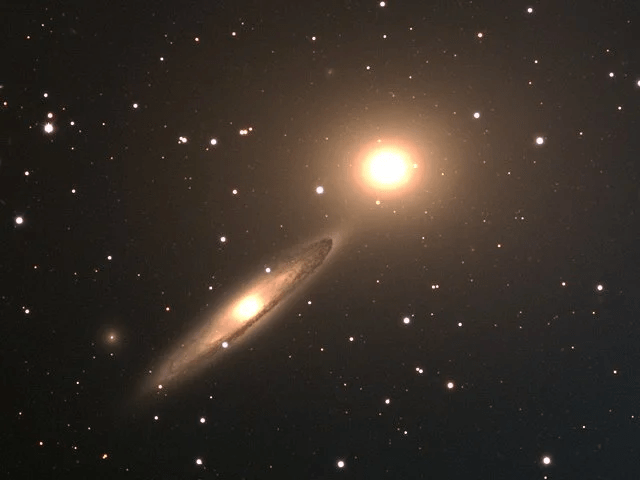
NGC 5090 is an elliptical galaxy associated with a strong radio source, while NGC 5091 is a spiral galaxy, viewed at a steep angle, almost edge-on. NGC 5091 is currently being tidally disrupted following the collision. The galaxies have apparent magnitudes of 12.6 and 13.9, respectively.
NGC 4696
NGC 4696 is an elliptical galaxy located 150 million light-years away. It is the brightest galaxy among all galaxies in the Centaurus Cluster (A3526), a large cluster containing hundreds of galaxies in the constellation Centaurus. The galaxy has an apparent magnitude of 11.4. It is surrounded by several dwarf elliptical galaxies located within the same cluster.
NGC 5253
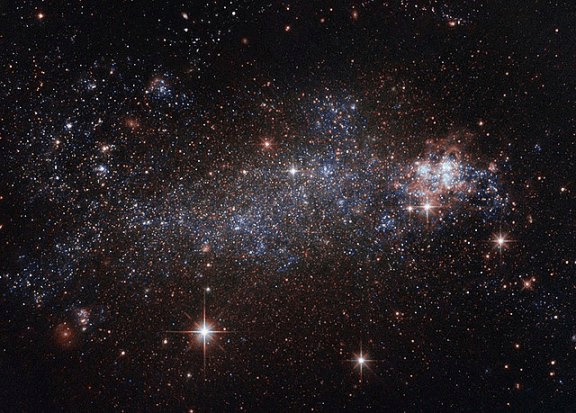
NGC 5253 is an irregular galaxy with an apparent magnitude of 10.3, located 10.9 million light-years from Earth. It is located in the M83 galaxy group. The galaxy was discovered by John Frederick William Herschel in 1787. One of the brightest supernovae of the 20th century, SN 1972E, was observed in this galaxy. It had an apparent magnitude of 8.5.
NGC 5408
NGC 5408 is another irregular galaxy, also discovered by Herschel in 1834. It is located near the M83 galaxy group, but it is unclear whether it belongs to this group or not. The galaxy has an apparent magnitude of 12.2 and is 15.7 million light-years away.
NGC 4603
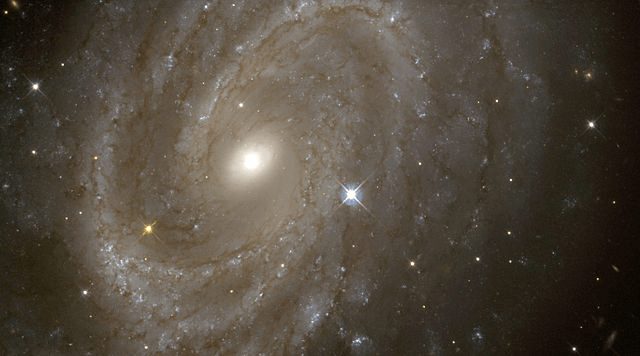
NGC 4603 is a notable spiral galaxy containing more than 36 Cepheid variable stars. It is one of the most distant galaxies known to contain Cepheids. The galaxy has an apparent magnitude of 12.3.
NGC 5291
NGC 5291 is a system of interacting galaxies surrounded by a collisional ring. The ring contains young stars forming tidal dwarf galaxies.
 Khanh's Gallery
Leave a comment