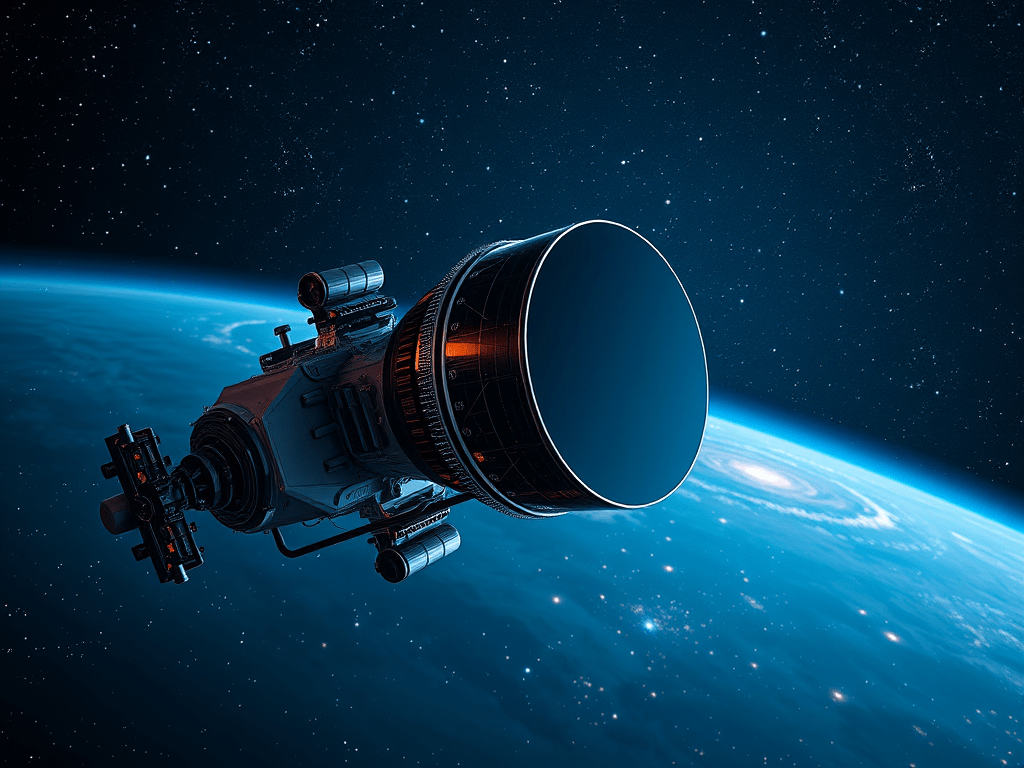
The James Webb Space Telescope (JWST)—often abbreviated as Webb—was successfully deployed on December 25, 2021. Since its commissioning, it has yielded imagery of significant scientific value and promises unprecedented discoveries unattainable by extant telescopic instrumentation.
The “Successor” Paradigm
What distinguishes JWST? I have frequently encountered this inquiry both prior to the launch and following the acquisition of the first operational images. NASA explicitly designates Webb not as a mere replacement, but as a “successor” to the Hubble Space Telescope (HST). While sharing similar mission objectives, JWST advances astronomical capabilities significantly, utilizing distinct methodological approaches to probe deeper into the cosmos.
From a technical standpoint—setting aside improvements in primary mirror aperture and detector resolution driven by technological evolution—there exist two critical divergences between Webb and Hubble: Spectral Range and Orbital Configuration.
I. Wavelength Coverage (Spectral Range)
Hubble is primarily an optical telescope, observing the visible spectrum. Its sensitivity extends marginally into the ultraviolet (UV) and near-infrared (NIR) bands, but it essentially captures what the human eye would perceive.
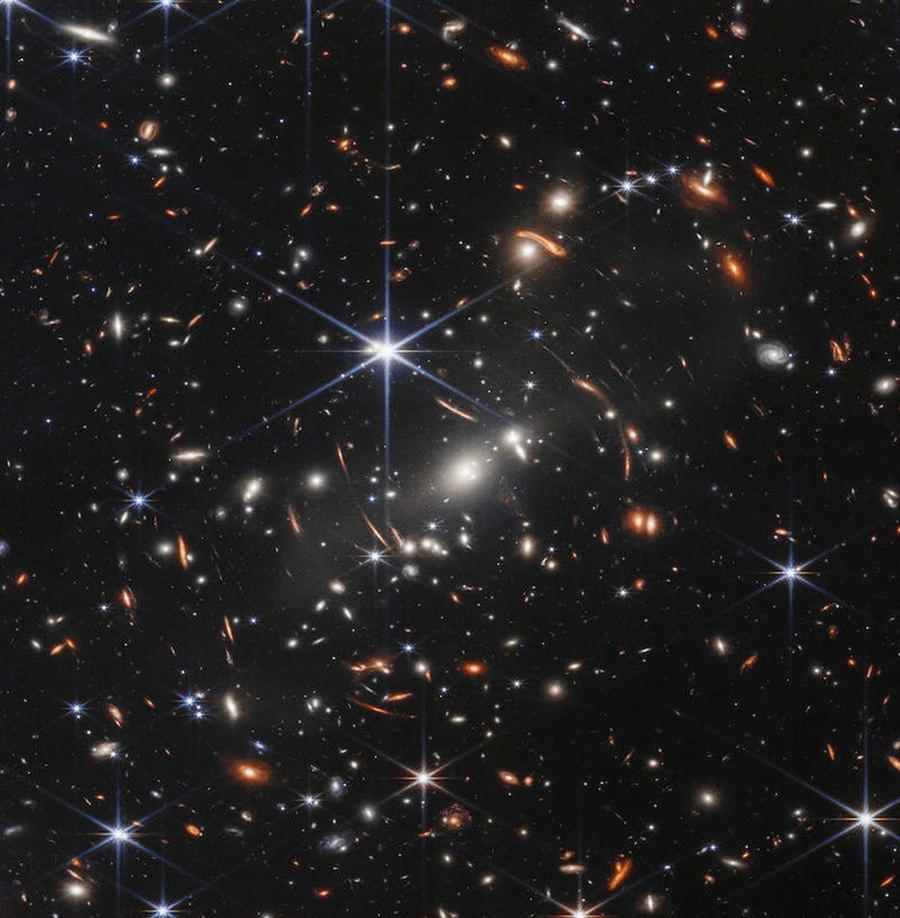
Conversely, JWST covers a spectral range extending from the long-wavelength end of the visible spectrum through the mid-infrared (0.6 to 28 micrometers). Strictly classified, it is an Infrared Telescope. The imagery produced is not “seen” in the conventional sense; rather, data collected at infrared wavelengths is processed into false-color composites for visual interpretation.
The Critical Importance of Infrared Astronomy
Infrared observation is essential for two primary astrophysical reasons:
- Cosmological Redshift: Due to the expansion of the universe, UV and visible light from primordial galaxies is stretched as it travels through spacetime, shifting into the infrared spectrum. Consequently, infrared sensitivity is requisite for studying the early universe (high-redshift objects).
- Dust Penetration: Within our own Milky Way, interstellar dust obscures most visible light from star-forming regions. However, infrared radiation (thermal emission) penetrates these dust clouds, allowing Webb to resolve phenomena deeply embedded within stellar nurseries that remain opaque to optical instruments like Hubble.
II. Orbital Configuration
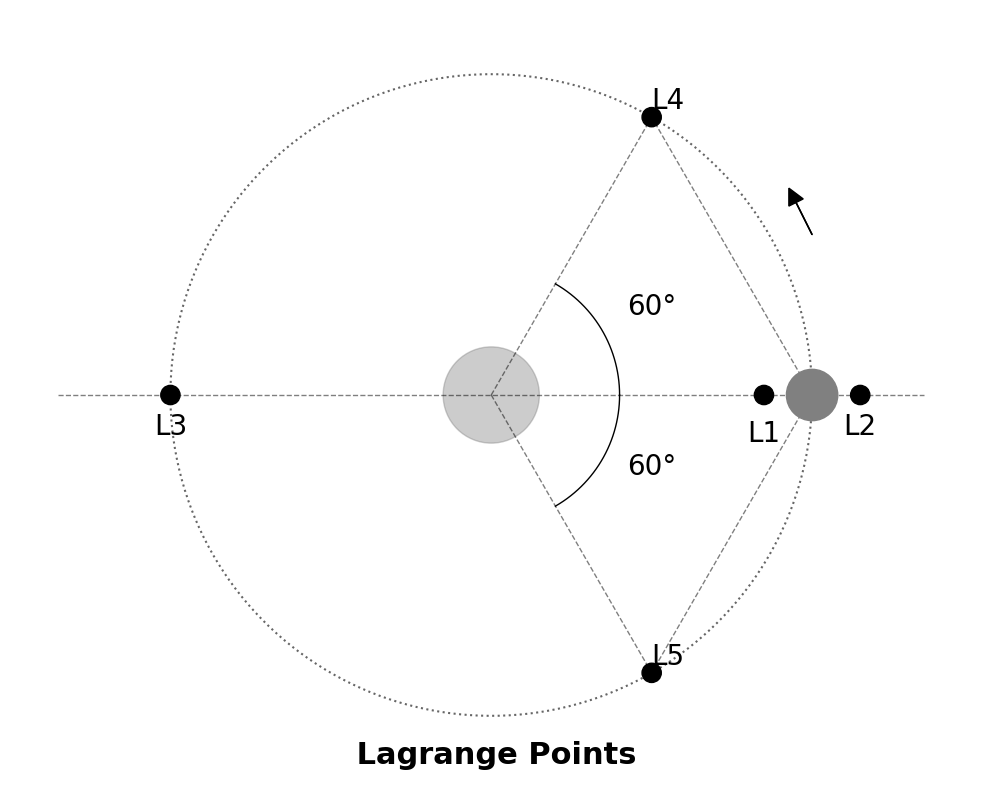
Hubble resides in Low Earth Orbit (LEO), deployed by the Space Shuttle Discovery, at an altitude of approximately 570 km. In contrast, JWST operates at the second Lagrange point (L2), located approximately 1.5 million kilometers from Earth—opposite the Sun. Due to this immense distance, its insertion required the heavy-lift capability of the Ariane 5 launch vehicle.
Thermal Stability at L2
The L2 position confers significant thermal advantages. Shielded by a tennis-court-sized sunshield, JWST is isolated from thermal contamination (infrared interference) from the Sun, Earth, and Moon. This allows the telescope to maintain a cryogenic operating temperature of approximately -240°C. Such extreme cold is mandatory to prevent the telescope’s own structural heat from emitting infrared radiation that would saturate its sensitive detectors.
Conclusion
In terms of engineering complexity and physical principles, JWST is significantly more sophisticated than Hubble. Following its successful insertion at L2, JWST has provided critical data regarding high-redshift galaxies, star clusters, and exoplanetary atmospheres. Barring technical anomalies, it will serve as the premier instrument for deep-space exploration in the coming decade. The true value of Webb lies not merely in aesthetic imagery, but in the unearthing of previously obscured cosmological data and mysteries.
 Khanh's Gallery
Leave a comment