With significant contributions and achievements in contemporary astronomy, the following astronomers of Vietnamese origin are highly prestigious names in the global research arena.
Astronomy is one of the world’s oldest sciences. It is a fascinating field that consistently receives significant investment and attention in developed nations. Astronomy appeared in Vietnam quite early, dating back to the Lord Trinh era. Traces remain today at the Kien An Observatory gallery in Hai Phong, notably the meteorological table of Hai Thuong Lan Ong – Le Huu Trac.
Today, through their significant contributions to contemporary astronomy, the following astronomers have affirmed their talent and prestige in the world of research.
Astrophysicist Nguyen Quang Rieu
Professor Dr. Nguyen Quang Rieu was born in 1932 in Hai Phong and went to France to study at the age of 18. He formerly worked at the Sorbonne University in Paris and served as Research Director at the Paris Observatory.
He is also an Honorary Research Director of the French National Centre for Scientific Research (CNRS). In 1973, he received an award from the French Academy of Sciences after discovering and precisely determining the location of an explosion in the constellation Cygnus.
Professor Rieu has published over 150 scientific papers on astrophysics, particularly in the field of radio astronomy, in international scientific journals. He has also written numerous books, both academic and popular science, in multiple languages.
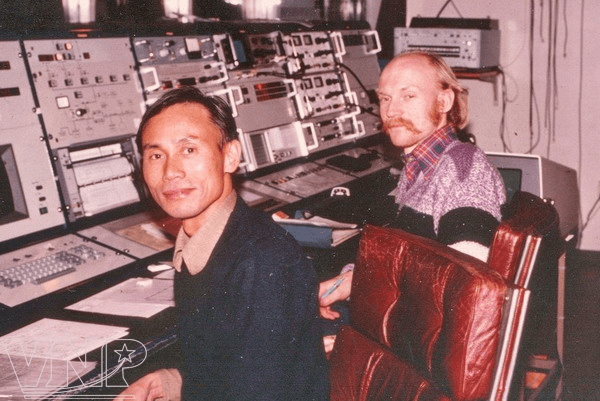
Some of his famous books include: “The Universe: A Grand Natural Laboratory,” “Wandering the Milky Way,” “The Milky Way: Now Bright, Now Dim,” and “The Sky of Childhood.”
Since 1976, he has frequently returned to Vietnam to participate in the development and popularization of astrophysics and environmental physics, two research fields still in their infancy in the country.
Professor Nguyen Quang Rieu is one of the very few scientists of Vietnamese origin in the world to achieve success in astronomy—a science with limited conditions for development in Vietnam. Furthermore, he is a pioneer in popularizing and inspiring a love for astronomy among Vietnamese youth.
Professor Trinh Xuan Thuan
Professor Trinh Xuan Thuan is currently a Professor of Astrophysics at the University of Virginia, USA. Born in 1948 in Hanoi, he later moved with his family to Ho Chi Minh City. In 1966, he went to Switzerland to study physics. A year later, he won a scholarship to skip directly to the second year at three of the most prestigious universities in the United States.
Professor Thuan is also a writer with many highly valuable books on cosmology, discussing thoughts on the correlation between science and personal faith.
He has been awarded numerous prizes in the fields of astronomy and culture/society: In 2007, he was awarded the Grand Prix Moron by the French Academy for his work “Les Voies de la lumière” (The Ways of Light), and the UNESCO Kalinga Prize in 2009 for his contributions to the popularization of science.
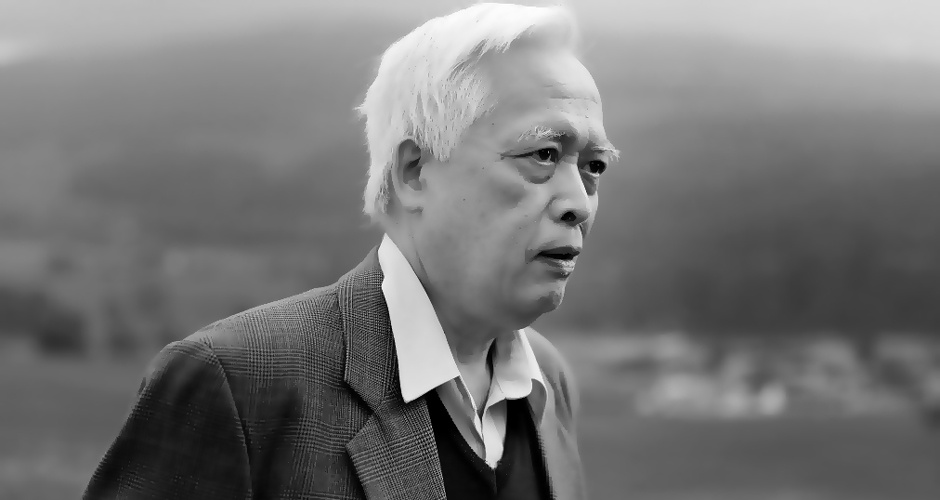
In 2012, he was awarded the Prix mondial Cino del Duca (World Award of the Simone and Cino del Duca Foundation) by the Institut de France. In 2014, the French Government awarded him the Legion of Honour (Légion d’honneur) for his contributions to promoting scientific culture and transatlantic cooperation in the field of astrophysics.
Trinh Huu Chau (Eugene Trinh) – The Astronaut Who Flew into Space
Trinh Huu Chau (also known as Eugene Trinh) was born in 1950 in Saigon. At the age of 2, he moved to Paris with his family, and in 1968, he settled in the US.
He graduated from Columbia University in 1972, then received a scholarship and completed his Master’s in Physics and Philosophy in 1974 and 1975. Two years later, he received his Ph.D. in Applied Physics from Yale University. In 1979, he worked at NASA’s Jet Propulsion Laboratory (JPL). Currently, he serves as the Director of the Physical Sciences Division at NASA Headquarters in Washington, D.C.
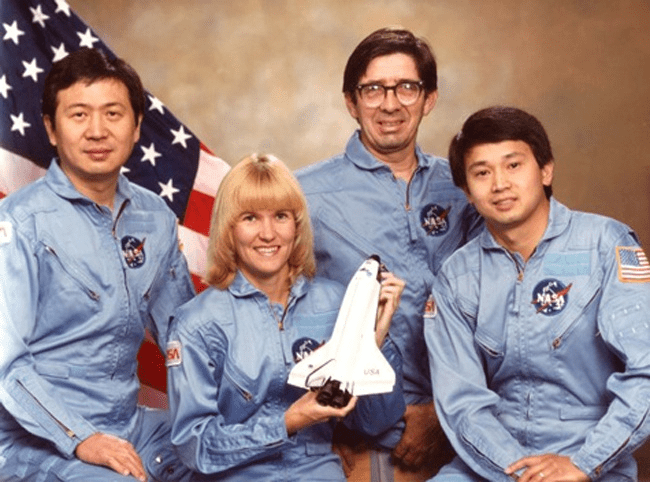
Together with the crew of the Space Shuttle Columbia (mission STS-50), he conducted experiments on fluid dynamics and fluid control techniques in containerless conditions in orbit for nearly 14 days (from late June to early July 1992).
Trinh Huu Chau became the first Vietnamese-American to fly into space on June 25, 1992, on NASA flight STS-50, spending 13 days, 19 hours, and 30 minutes in outer space. After the hero Pham Tuan, he represents the second person of Vietnamese blood to fly into space.
In a presentation, when asked what he saw while in orbit, Trinh Huu Chau replied: “That was Vietnam. I saw my homeland. How peaceful it looked.”
Academician of the International Academy of Astronautics Nguyen Xuan Vinh
Professor Nguyen Xuan Vinh was born in 1930 in Yen Bai. In 1950, he graduated from high school under the French curriculum in Hanoi with a full Baccalaureate. From a young age, he was gifted in mathematics. He wrote books very early; even as a student, he had books published.
In 1962, he went to the US to begin his scientific career at the age of 32. In 1965, he was the first person to be awarded a Ph.D. in Space Science at the University of Colorado. Three years later, he became a professor at the University of Michigan. In 1972, he was appointed full Professor. In the same year, he obtained another Ph.D. in Mathematics at the Sorbonne University, Paris, France.
In 1982, he was a Professor of Applied Mathematics at National Tsing Hua University, Taiwan. Two years later, Professor Nguyen Xuan Vinh became the third American and the first Asian to be elected to the National Academy of Air and Space of France. By 1986, he became a full Academician of the International Academy of Astronautics (IAA).
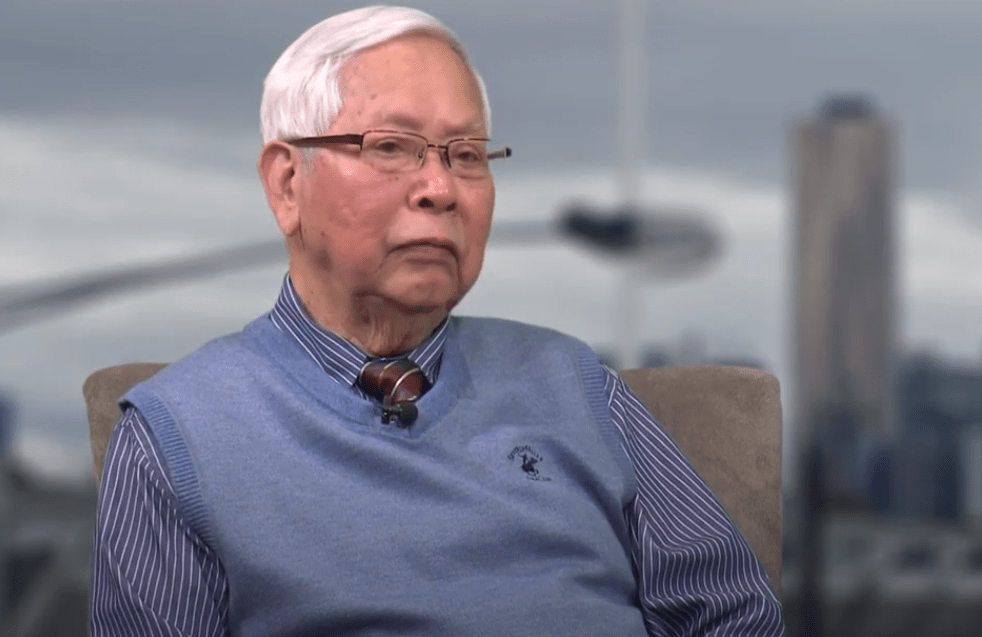
Professor Nguyen Xuan Vinh was the first Vietnamese person, and also the first person at the University of Colorado, to be awarded a Ph.D. in Space Science after successfully researching the optimal trajectory for spacecraft, a project funded by NASA.
His theories contributed significantly to the success of the Apollo missions to the Moon, as well as applications for the safe recovery of Space Shuttles returning to Earth. He is also a writer under the pen name Toan Phong, with many published famous works.
He is frequently invited to give guest lectures at many major universities and international conferences.
He retired in 1999. The University of Michigan awarded him the title of Professor Emeritus of Aerospace Engineering for his contributions to science and education.
Jane Luu – The Female Astronomer Who Won the “Nobel of Astronomy”
Luu Le Hang (also known as Jane Luu) is a Vietnamese-American astronomer born in 1963. Her ancestral home is in the North, but she grew up in the South. In 1975, she moved to the US. In 1984, she was the valedictorian Bachelor of Physics at Stanford University, followed by a Master’s degree at the Berkeley Institute of the University of California. In 1990, she received her Ph.D. in Astrophysics from the Massachusetts Institute of Technology (MIT).
In 1991, she received the Annie J. Cannon Award in Astronomy from the American Astronomical Society. In 1992, after receiving her doctorate at MIT, she received a Hubble Fellowship from the University of California-Berkeley.
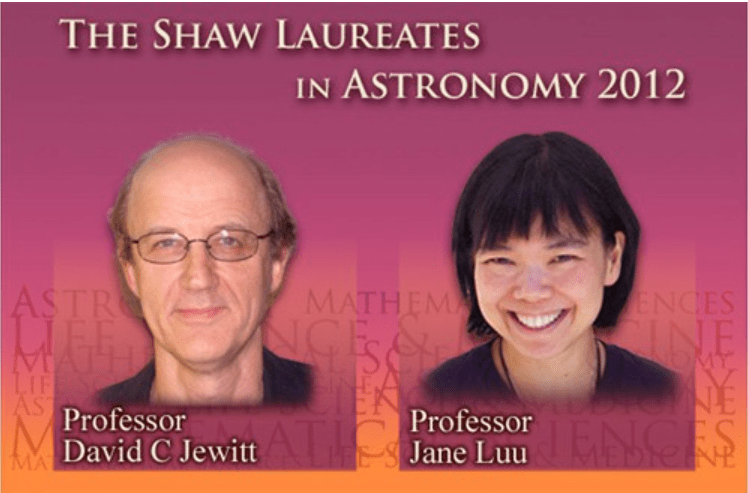
After many years of searching, she and her colleague and former advisor, David Jewitt, discovered the first object in the Kuiper Belt. Thanks to subsequent research on the Kuiper Belt, the two of them, along with Michael E. Brown, were awarded the 2012 Kavli Prize in Astrophysics by Norway. Asteroid 5430 Luu was named in her honor. The pair was also awarded the Shaw Prize in Astronomy in 2012.
Since 1994, she has been a lecturer in the Department of Astronomy at Harvard University. She currently works at the Lincoln Laboratory at the Massachusetts Institute of Technology.
 Khanh's Gallery
Leave a comment