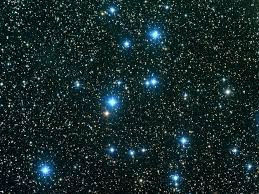
A single glance at the night sky reveals a universe of variety, but the most immediate difference between the stars is not their color or position—it is their intensity. Some stars, like Sirius or Vega, blaze with such power that they remain visible even through the light pollution of modern cities, piercing the darkness like beacons. Others are so faint they require a moonless night and a sharp eye to detect, appearing as mere whispers of light against the void. To organize this chaotic canopy, the very first astronomers created a system based on these differences. They categorized the stars into distinct “classes” of brightness, which they called magnitudes.
The Ancient Origins: The first sense of brightness from the eyes.
The story begins around 129 B.C. with the Greek astronomer Hipparchus of Nicaea. Working from the island of Rhodes, Hipparchus compiled one of the first comprehensive star catalogs.
Without telescopes or photometers, his only instrument was the naked eye. To organize the stars, he ranked them by their prominence in the night sky using a simple social analogy:
- 1st Magnitude: The “first class” stars—the brightest and most prominent in the sky (e.g., Sirius, Spica).
- 2nd Magnitude: The next tier of brightness.
- 3rd through 5th: The intermediate stars.
- 6th Magnitude: The faintest stars that could be seen by the human eye on a dark night.
This system was merely qualitative. It was later preserved and refined by Claudius Ptolemy in his famous 2nd-century work, the Almagest. For nearly 1,500 years, this “1-to-6” ranking remained the standard language of the sky.
However, with the advent of more precise instruments, the ancient system proved insufficient. Astronomers needed a robust definition of magnitude—one capable of extending to stars far brighter and fainter than the human eye could see.
The invention of telescopes
For nearly 1,500 years, the magnitude scale remained a closed system. The “6th magnitude” was not just a category; it was a hard physical limit, representing the absolute edge of the observable universe. However, that limit was shattered in 1609 when Galileo Galilei turned his spyglass toward the heavens. Through his telescope, Galileo discovered that the hazy band of the Milky Way was actually composed of countless stars—fainter than the 6th magnitude and invisible to the naked eye. As telescopes grew larger and more powerful over the following centuries, astronomers found themselves descending a ladder that seemed to have no bottom. They discovered stars of the 7th, 8th, and eventually 10th magnitudes.
Simultaneously, the telescope revealed flaws at the top of the scale. With better instrumentation, it became obvious that the “1st magnitude” bucket was far too broad. Under the old system, Sirius (the brightest star) and Spica (a bright, but much fainter star) were both simply “Class 1.” However, precise measurements showed that Sirius was actually vastly brighter than Spica. The ancient “1-to-6” ranking could no longer contain the reality of the cosmos. By the mid-19th century, the cataloging of the sky had become chaotic. Some astronomers were using decimals, others were inventing new classes, and no two observatories could agree on where one magnitude ended and the next began. The scientific community needed a standardized, mathematical ruler.
The modern definition
To establish a mathematical definition for magnitude, we must first rigorously define the physical concepts underpinning ‘brightness.’
When you look up at the night sky, your eye is acting as a collector. It is catching streams of photons that have traveled across the galaxy to land on your retina. In physics, this flow of light energy across a specific surface area is called flux . Apparent magnitude is simply the number astronomers assign to that flux. It measures how bright a star looks to an observer on Earth. Notice that it makes no distinction between a weak star nearby and a powerful star far away.
In 1856, the English astronomer Norman Pogson stepped in to solve the crisis about the definition of magnitude. While working at the Radcliffe Observatory in Oxford, he analyzed the historical catalogs and noticed a remarkable consistency in the ancient Greek estimations. Despite having no photometers, Hipparchus had intuitively calibrated his eyes such that a 1st magnitude star was roughly 100 times brighter than a 6th magnitude star. Therefore, he formalized the scale by defining that a difference of exactly 5 magnitudes corresponds to a brightness ratio of exactly 100:1.
To make this work mathematically, the steps between magnitudes had to be equal. If 5 steps equal a factor of 100, then 1 step must equal the fifth root of 100 . This number, now known as Pogson’s Ratio, became the “golden number” of stellar brightness. It established a precise logarithmic rule that is still used today.
The correct formula for the apparent magnitude is:
where is the reference flux. This is the flux of standard “zero-magnitude” star (like Vega, historically). It serves as the calibration point.
Absolute magnitude and the distance modulus
Apparent magnitude has a major flaw: it is “unfair.” It judges stars based on their location rather than their actual power. A tiny, dim star located right next door will look brighter to us than a massive supergiant located across the galaxy. To solve this, astronomers invented absolute magnitude . This specific magnitude solves the question: “How bright would these stars look if we lined them all up at the exact same distance?” And astronomers chose a standard distance of 10 parsecs (roughly 32.6 light-years).
Definition: Absolute magnitude is the apparent magnitude a star would have if it were placed exactly 10 parsecs away.
This strips away the distance factor, allowing us to compare the stars’ true luminosity.
Now, one should notice that the difference between how bright a star looks and how bright it is is determined entirely by its distance. This difference is called the distance modulus The mathematical relationship between these three variables is one of the most useful tools in astrophysics:
Advanced Magnitude Systems
While the “Apparent vs. Absolute” distinction is about distance, professional astronomers also need to distinguish how they measure the light. Different instruments and different fields of study (e.g., cosmology vs. stellar physics) use different reference standards. While the “Apparent vs. Absolute” distinction is about distance, professional astronomers also need to distinguish how they measure the light. Different instruments and different fields of study (e.g., cosmology vs. stellar physics) use different reference standards. These are the “flavors” of magnitude.
The Reference Standards
Vega Magnitude
The Classic Standard: This is the traditional system used in visual and ground-based astronomy.
Definition: The star Vega (Alpha Lyrae) is defined to have a magnitude of 0.0 in every filter.
The Catch: This implies that Vega is the “perfect” white star. In reality, Vega is slightly variable and has an infrared excess (a dust disk). Modern definitions use a theoretical model of Vega rather than the star itself to correct for these flaws.
AB Magnitude
The Physical Standard: Used extensively in extragalactic astrophysics and cosmology (e.g., SDSS). It removes the reliance on a specific star.
Definition: It is based on flux density per unit frequency . It assumes a “flat” reference source that has constant energy across all frequencies.
Formula:
AB Magnitude
The Hubble Standard: Used primarily by the Hubble Space Telescope (STScI) and UV astronomy.
Definition: It is based on flux density per unit wavelength
Formula:
The Filter Systems (Photometric Systems)
Astronomers rarely measure “all light” at once. They measure light through colored glass or digital filters. The magnitude depends entirely on which filter you are looking through.
- The Johnson-Cousins System (UBVRI): The most common standard for stellar astronomy: Ultraviolet, Blue, Visual, Red, Infrared
- The Sloan System (ugriz): Used by the Sloan Digital Sky Survey (SDSS) to map the universe. It uses non-overlapping filters optimized for CCD cameras: u (ultraviolet), g (green), r (red), i (near infrared), z (infrared).
- Color Index : By subtracting the magnitude in one filter from another, astronomers create a Color Index that acts as a thermometer. This is because that according to Planck’s law, hotter stars emit their peak energy at shorter wavelengths, meaning they are physically brighter in the blue filter than in the visual filter . Because the magnitude scale is inverted—where brighter light equals a lower number—this higher blue intensity results in a smaller value compared to , producing a negative color index .
The Total Energy System
Bolometric Magnitude
All the systems above measure only a slice of the spectrum (just blue, or just red). Bolometric magnitude measures the total radiation emitted by a star across the entire electromagnetic spectrum—from gamma rays to radio waves. Since we cannot see all this light at once, it is usually calculated using a correction factor:
where is the visual absolute magnitude and is the bolometric correction. Note that must be negative.
The Extended Object System
Surface Brightness
Stars are point sources; they have no size. But galaxies and nebulae are “extended objects”—they cover an area of the sky. If you simply sum up all the light (integrated magnitude), a huge, faint galaxy might have the same magnitude as a tiny, bright star.
For a source with a total or integrated magnitude extending over a visual area of square arcseconds, the surface brightness is given by
To distinguish them, astronomers measure magnitude per square arcsecond .
A Counter-Intuitive Fact: Surface brightness is independent of distance. If you move a galaxy twice as far away, it gets 4x dimmer, but it also appears 4x smaller. The two effects cancel out, and the “brightness per pixel” stays the same.
 Khanh's Gallery
Leave a comment